Only the Lonely

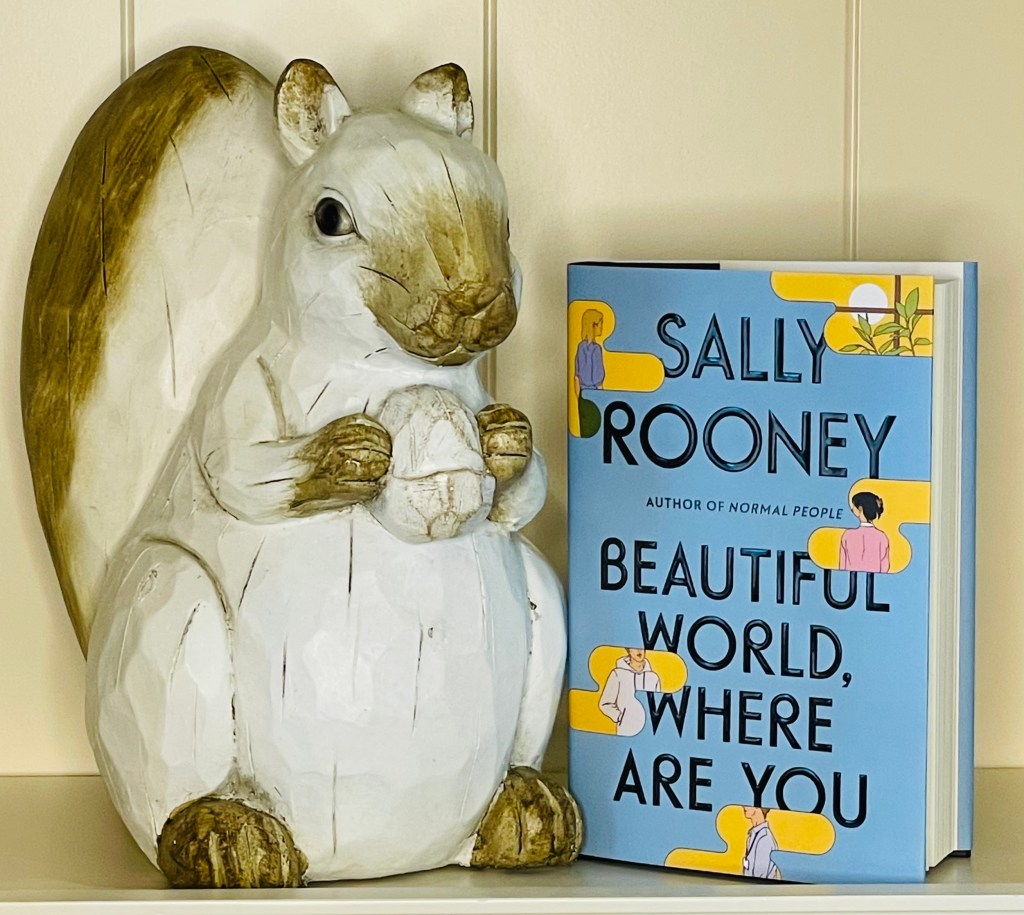
I must admit bitterly that I was hoping to dislike Sally Rooney’s latest novel Beautiful World, Where Are You. Why? Because I am a small and petty person. The social media and marketing storm surrounding her latest release was heretofore unseen in my lifetime and I wondered/doubted if it was warranted. Is this to be expected for all new novels in the future? I doubt it, but would love to see it for my own. Just saying.

My bitter bone was to be disappointed as my opinion quickly turned to admiration for a Beautiful World, Where Are You, a compelling look into the lives and more importantly the minds of millennials. Rooney’s sentence structure was different from anything I have read in the past and her use of emails between friends to move the story along while not innovative was very well done. Rooney has been described as the first standout millennial writer. I hate to categorize a writer by genre let alone by generation but I wonder if that may seem like a heavy burden to carry on a slim pair of millennial shoulders. Even ones as talented a Rooney’s. Time will tell. If her latest characters are a reflection of the stability of millennial shoulders she may want to hit the gym.

Beautiful World, Where Are You depicts the lives of two best friends, Alice and Eileen, a childhood crush, Simon, and some rando, Felix, from Tinder, as they struggle to find happiness. Their search for happiness is framed by typical millennial experiences that demonstrate just how different this generation is from any other previous generation. This will come as no surprise to the Gen Xers out there, but this generation does not think like you or experience life’s milestones in the same way. To misquote a prescient James Van Der Beek from Varsity Blues, “they don’t want your life.” But what do they want? I don’t think even they know.

Alice is a successful writer recovering from a nervous breakdown(are they even called this anymore?), Eileen also works in publishing, but as an editor for a small literary magazine, Simon is well to do and works for the down trodden(even now I don’t know what he really does, but he too has trouble describing his job to others), and finally there is Felix. Felix, the Tinder rando, works in a nameless warehouse, that seems a lot like a dig at Amazon, and is unhappy with his job but doesn’t seem inclined to change his situation. No one is happy. But why?

In between serious discussions of world politics, climate change and what the definition of “working class” really is(hint: it doesn’t mean that you work for a living) this group struggles with unhappiness and loneliness to such an extent that I had to ask myself, why ARE millennial so unhappy and so lonely?

The standard issue responses are as follows: technology ruined their social skills, helicopter parents arranged playdates so they never learned how to make friends on their own, they’ve inherited a broken climate, economy, world and the real big one is their reluctance to engage in or maybe a better word is the loathing of traditional marriage. This reluctance to participate in what they consider a broken and irrelevant institution has deferred and for some excluded the option of a family. Those who do marry are waiting until much later in life than previous generations. So for now many millennials find themselves going through life’s milestones alone where in the past, people their age had already partnered up and started families.

This repudiation of the traditional idea of marriage is stated over and over again in the novel and yet Eileen jokes with Simon that he needs a wife to take care of him and have dinner waiting on the table when he comes home from a hard day’s work. Contrary to our past generational gendered expectations Simon refuses this archaic view of domesticity in favor of a more equal partnership while Eileen is the one who is pushing for it and dare I say longing for a reoccurring role on Real Housewives of the 1950’s. The cognitive dissonance is palpable and revealing all at the same time. Eileen is against the idea of marriage but still longs for the stability and happiness she has been taught that it brings. How as a society can we change these ingrained patterns of belief? Are millennials reacting to the bad marriages of their parents while at the same time having internalized the happy marriages of films and sitcoms and are now unable to find their own path that reflects their own beliefs and expectations that are relevant to the world they live in now and not the world of their grandparents?

The real issue here is that millennials are just the latest generation to want it all and not know how to get it and while in my opinion they are closer than ever to finding a solution to relationship equality they can’t seem to get out of their own way. We can’t overthrow hundreds of years of traditional gender roles and expectations in one lifetime, no matter how much progress we’ve made there will always be the double dealing specter of a simpler and better times lurking in the shadows. There is an allure to the notion of the 1950’s perfect housewife that is dangerous to everyone. A comfortable home, 2.5 adoring children, a loving partner that provides for you everything you need and want sounds great, but our grandmothers will tell you that other people’s happiness is never what it seems and that submission comes at a cost. Your freedom and your independence aren’t worth the comfort of your allusions of a better time.

For the characters in the book, loneliness and unhappiness comes from a refusal to see what life is really about. There will always be big global problems and yes we should do our best to change the world for the better, but in the end we need love and friendship to make sense of our existence. Otherwise what is the point of solving global warming if you have no one to share the experience with?

The Madwomen of Paris

by Jennifer Cody Epstein

Control, whether of one’s life or one’s body is central to Jennifer Cody Epstein’s latest novel The Madwomen of Paris.

A plague of hysteria is washing over the women of Paris and their salvation may be locked in their unconscious minds or at least that is what the doctor of Paris’s most notorious asylum for women thinks. How like a man to think he has all the answers and none of the responsibility to treat his patients as full equals in humanity. As the doctor hypnotizes his patients, all in the name of science of course, we clearly see this as a metaphor for the exercise of control men have over women in this society. Can the tables be turned?

Historical fiction focusing on the struggle of women to gain independence and autonomy is flooding the book world right now and about time. I appreciate all the subtle easter eggs of early feminism Epstein includes within the novel and I especially appreciate how well her main character Laure demonstrates her struggle to merely exist in a man’s world as an orphan.

“I thought about how instinctive it is, the trust we place in those who call themselves our protectors. How easily that trust turns into a trap.”

Through Laure, Epstein deftly explores a woman’s vulnerability and limitations in 19th century Paris, but also the desire to direct her own actions. And as always there is the danger women face when expressing their emotions that they will be judged and condemned as a madwoman.

A truly enjoyable read.

This is how they break us. They take everything away, our very dignity, and anything we get in return feels like a gift.

Kim Liggett’s latest novel The Grace Year is a dystopian thriller about a community in which women and their power, referred to as their “magic” in the book, are feared as vessels containing danger. In this community women and their power are something so be controlled. Sound familiar?

On their sixteenth birthdays all the girls of the town are rounded up and sent to a camp in the woods for a year to rid themselves of their magic. After this year of purification those who survive are then deemed suitable to become wives to whichever local loser has chosen them. Hooray!

If this seems like a familiar plot line then you haven’t been in a cave or a hole for the last few years. Dystopian fiction has flooded the literary scene, especially feminist dystopian fiction, in part trying to piggyback on the riotous success of the popular Hulu adaptation of Margaret Atwood’s The Handmaid’s Tale and depressingly so as a coping mechanism in a world that many fear is looking way too similar to what we once thought of as just “good fiction.”

Lately the dystopic worlds created by writers like Atwood or Naomi Alderman’s (The Power), to name two, are getting too close for comfort. With recurrent themes of denial of access to education, the consolidation of power into the hands of men and out of the hands of women, and controversial ideas about just who should get to control one’s own body playing out in the real world as well as in literature a reader is forgiven for not wanting to spend another minute of their time down the rabbit hole contemplating the state of looming oppression, fertile women farms, and just who is your closest male relative and why does he now control my money . So why do we do it?

There is no freedom in comfort.

These novels make us uncomfortable, which is a good thing. Comfort makes us complacent and forgetful that while we have made some progress towards equality we have not attained full equality until it cannot be taken away with the stroke of a pen or a Supreme Court decision. The Grace Year is worth spending some time down the rabbit hole because Liggett makes it worth our while reminding the reader that women are more powerful united than they are apart. That together we have the power and the ability to effect change, but we can not lose our momentum to infighting if we want to survive.

Women in the War

Good Night, Irene

By Luis Alberto Urrea

I’ve read countless books about WWII. In fact, my bookclub once spent an entire year reading nothing but books about the marginalized stories of WWII victims and survivors. Needless to say I thought I had read it all, but this book surprised me. I had never heard of the Donut Dollies of the Red Cross or about the Clubmobiles (GMC 2 1/2 ton trucks made into kitchens on wheels) they drove through Europe and into the thick of battles to bring a smiling face, a cup of coffee and a donut to the fighting soldiers.

Urrea is a master storyteller capturing the chaos of war raging and the chaos of a world not changing fast enough. The task set forth for these brave determined women is at once just as dangerous as soldiering, maybe more so due to their lack of training, but their service is not valued as an equal contribution by society.

“You weren’t even a soldier. You were making cookies. What could you possibly have to get over?”

Urrea highlights the mental anguish these women went through to serve their countries and to create space for themselves in a world defined by the actions of men all the while buoyed by friendship and determination to survive. There aren’t a lot of stories about women seeking adventures. In the past this seems to have been a genre written predominately about men and their struggles, but Urrea captures the complex nuances of female relationships quite well and what would drive these women to break through barriers and defy family expectations.


I believe this is Urrea’s finest work to date.

New Romance for a New Woman

How to Best a Marquess

A friend once told me that she would never allow her teenage daughter to read romance novels because they would lead her to have unrealistic expectations about love and sex. I congratulated her on her sound parenting, all the while laughing uncontrollably in my head that she thought her daughter wasn’t binge reading YA smut.

I’ve thought of her statement a lot over the years. I grew up reading romance novels and while I don’t think they gave me unrealistic expectations. I do think early romance novels relied heavily on unhealthy power dynamics and reinforced gender roles in dangerous ways. The formula was simple, young virgin needs rescuing by powerful but damaged older man. They fall in love and live happily ever after.

The irony is that these novels were almost all written by women. Women romance writers were reinforcing the sexist and sometimes misogynistic tropes to millions of readers for decades. Until now.

The new generation of romance novels today no longer focus on the damsel in distress awaiting rescue. Instead these damsels are living life on their own terms, searching for independence and often battling for equality and rights for others. It’s exhausting! But what is a heroine to do?

Jana MacGregor’s latest offering How to Best a Marquess is an attempt at the new incarnation of the romance novel, the historical early feminist. Her heroine Beth had been disappointed in love and then married off by her guardian brother to a bigamist. She has lost her dowry and her standing in society, but with the bigamists death and ensuing scandal she has gained her freedom. All she needs now is to recover her lost dowry and ensure equality for all women. Sounds very simple and easy.

Through the novel Beth makes her intentions to never marry again very clear. To marry would require her to give up her freedom and identity, and most importantly to risk her heart again. MacGregor carefully crafts scenes to demonstrate Beth’s internal struggle to remain independent, but at times the repetition become monotonous and the reader is ready to move along. There are several historical inaccuracies in the novel, but nothing too serious to ruin the pleasure of reading. My main concern was that I didn’t feel a connection to either of the characters. I wasn’t invested in their story. MacGregor put the right words into their mouths but didn’t give them the depth of character to make those words impactful.

While MacGregor’s latest novel isn’t the best example of this new romance, I like the direction the genre is taking. Usually the characters are more complex and demonstrate more dimension than the cliched damsel in distress. Often they focus on positive female friendships, the desire to follow your passions and inspire a healthy view of sexuality, not often found in romance novels of the past.

If my friend and I were having the same conversation again, instead of laughing in my head I would hope that she would read a few of the new romances and see the direction the genre is moving towards. I think she would be pleasantly surprised. I’m sure her daughter could loan her a few.

A Progressive Omission

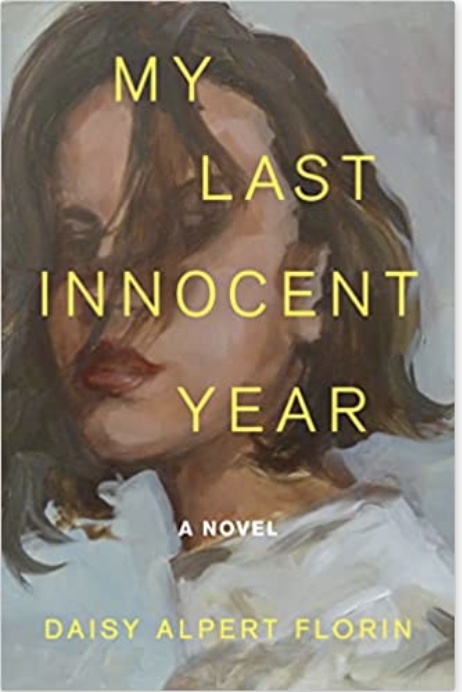
My Last Innocent Year: A Novel by Daisy Alpert Florin

Reviewed by Rebecca J Duncan

My Last Innocent Year: A Novel by Daisy Alpert Florin is a coming of age story set at the end of the last century, which is a scary way of saying the late 1990’s. For those of us lucky enough to live through the toxic amounts of hairspray and kohl black eyeliner applied with a jumbo crayon, Florin’s seemingly effortless prose will make you nostalgic for your oversized flannel shirt and that glorious time when you knew everything and nothing all at the same moment. But there is more to be found in Florin’s pages than memories of youth. She is saying something very important by not saying anything at all.

Isabel is your average college senior, excited for her last year of school and worried about what she will do after graduation. We learn a lot about her history and her friends, but what is different than many other books in this genre is that while Isabel may not know her own mind she is very comfortable with her sexuality as a woman. This seems small, but it is a relatively new development in literature.

Isabel is 21-years-old. She is sexually active and has been with several partners. She will experience a possible date rape, a relationship with an older professor and flirtations along the way and yet that isn’t the focus of the story. The focus is on Isabel learning her own mind and following her dreams. The days are long past( I hope)when heavy handed morality tales bent on scaring young girls onto the path of purity and obedience were published with ease, but their successors have been around in disguise every time a teenage girl gets pregnant after a night with the town bad boy. Every time the heroine is run out of town for sleeping with a married man. In each of these tropes, judgement is passed and it falls on the woman. Sex is dangerous for you and you are bad for wanting. You will be punished!

Florin sidesteps these cliched traps and instead traverses the higher ground of Isabel’s psyche. Who is she as an adult? As a woman? What are her thoughts and beliefs? You will always be your parent’s child, but what do you owe them or their memory? These questions are at the center of this novel.

By choosing or refusing to make Isabel’s sexuality the center of the story Florin has normalized Isabel’s right to sexual freedom. Free from judgment and free to find her path anyway she chooses.

Women Talking by Miriam Toews

Miriam Toews’ latest offering Women Talking is based on a true story of a Mennonite colony in Bolivia and the unspeakable violations the women of that community suffered at the hands of their own.

But rather than be about the details of the crimes, Toews chooses to focus on the women, their reactions, and the choices that they now have to make as they find out their attackers or “unwelcome visitors” as the elders prefer to call the rapists who are being bailed out of jail by the men of the colony and will soon be returning.

The women decide that they have three choices:

Do Nothing

Stay and Fight

Leave

The women gather in a hayloft to discuss their options and through these discussions the reader gets a glimpse of the pain, powerlessness and anger the women feel as they are caught between deciding what is more important– their own safety and that of their children or their religion as it is explained to them by men. Since women haven’t been taught to read, they have never read the Bible or been allowed to interpret the scriptures on their own, but they are starting to suspect that what they have been told may not jive with the true teachings of the Lord.

“She had everything she wanted; all she had to do now was convince herself that she wanted very little”

The antiquated lifestyle and speech of the Menonites makes this novel feel like it is from the distant past when in fact these crimes took place between 2005-2009 and the subject matter couldn’t be more timely. The women discuss their lives under a patriarchal rule and the reader can’t help but realize that while Toews is discussing an isolated colony in Bolivia she could easily be talking about women anywhere and that the three choices the women have in the novel are the same three choices that face millions of women everyday.

Toews does a wonderful job of demonstrating how infantilizing a patriarchy is to women. By overloading them with daily chores, refusing them a basic education and allowing the women no voice in lawmaking or decisions the women are little better than slaves. But does one realize that they are slaves or being abused if they have never known anything else? Not all the women are aware of their inferior status within the colony and this revelation of acceptance, of willing to live by the status quo sometimes makes reading this novel hard. I often felt like grabbing and screaming at these women to stop discussing and start packing. But I also realized that I was reading this book from a position completely different from these women, a position of the educated, a position of the independent, a position of power, in other words a position of more than three choices.

When we have liberated ourselves, we will have to ask ourselves who we are.

A Thousand Ships by Natalie Haynes

Sing Muse Sing

O sing muse…sing dammit. Why is my muse so fickle–probably because I demand much and give so little in return. Admittingly, I also love to verbally abuse my imaginary muse (and Siri or Alexa depending on how helpful they are) and apparently so does the poet in Natalie Haynes latest offering A Thousand Ships, a retelling of the Trojan war from the women’s viewpoint. The muse abusing poet is not alone in his treatment of women for who doesn’t abuse women in the Greek classics? Homer’s Iliad and Odyssey both contain lots of raping and lots of slavery but bizarrely nary a complaint written down from the women. Let’s also not forget about Euripides’ Electra or Antigone and their treatment either. I guess we do find a lot of weeping, rending of garments, and tearing of hair, but all of that is explained away as custom and duty as if women existed as some sort of grotesque theater troupe caught in the middle of a performance piece rather than as human beings who deserve to have their roles acknowledged and not have to wait for an offended god to take revenge on their behalf.

O muse can you offer inspiration to save us from patriarchal literature–like now. If it’s not too much trouble. Please.

In A Thousand Ships Haynes acknowledges these roles and sets free the voices of the women whose lives were thrown into chaos by the rashness of men. She tells the stories of famous Greek women like Clytemnestra and her daughter Iphigenia and their anger and despair at Aulis when they realize that they have been set up and lied to my Agamemnon. She tells the story of the Trojan women who sit on the beach after the fall of Troy waiting to see which of the Greeks will now own them. She even gives voice to patient Penelope in the form of letters to her overdue husband Odysseus that cannot help but expose that she was anything but patient and understanding as Homer would like us to believe, but instead very much aware of her husbands adventures and angered at how his choices left her in a virtual prison for 20 years of her life–and a single mom to boot. Haynes gives the reader the other side of the story. The fear, the anger, the betrayal of knowing that no matter your station in life you had no control over your future. Slaves and queens both were lost to history and left voiceless–until now.

A Thousand Ships is one of several novels lately that has attempted to right the wrongs of one sided Greek literature. Pat Barker’s Silence of the Girls and Circe by Madeline Miller each deal with recognizable women from Greek literature who have finally been heard. These retelling of long established patriarchal tales are much needed and I hope the trend continues and spreads into other genres besides just Greek literature. Dare I say Shakespeare? Just remember to ask the muse nicely.

Go Put a Lip On

Last week I read a disturbing headline about a public service announcement in Malaysia encouraging women to refrain from being sarcastic if they asked for help with household chores during these concerning times. Women were also encouraged to dress up and wear make-up, apparently to make their presence more tolerable to spouses. As you could assume the internet went bat-shit over these sexist comments and soon the Malaysian government apologized for the tone deaf messages. But was that enough?

Reading those headlines and the social media backlash to the comments reminded me of a fabulous piece written by Gemma Hartley in 2017. The piece was entitled “Women Aren’t Nags–We’re Just Fed Up” and was about the emotional labor that women are expected to perform. Hartley is brilliant in the piece and if you haven’t read it I truly urge you to use the link and prepare yourself to be impressed with her writing and pissed off by her message. In the article Hartley describes the herculean task of trying to explain to her husband the concept of emotional labor without hurting his feelings or as the title suggests–coming off as a nag. A brief description of emotional labor in case you aren’t familiar with the term is all the shit that is swirling around in your head at any given moment. Doctor’s appointments, birthday parties, gifts that need to be bought. What size shoes do the kids wear. What’s for dinner. All that shit is emotional labor, and it almost always falls on the shoulders of women. Now throw in a pandemic and self-isolating and that emotional labor increases exponentially because now you are worried about not just what’s for dinner, but if you are going to get sick and die from going to the store to pick up milk, if they have any, because no one else thought to pick up milk or even seems to realize that milk is used in the house and runs out and isn’t brought and refilled by fairies.

The most disturbing aspect of the Malaysian incident was the realization that we haven’t progressed as far as we think we have and it is startling. These public service announcements were made with the intention of “maintaining positive relationships among family members,” by reminding women that it’s their job to control other’s emotions? I don’t think so. Why are we asking for help with household chores? Why are we keeping the peace by stroking egos and making ourselves pleasing to look at? Why must we still make ourselves smaller to survive?

The Jane Austen Society: A Novel by Natalie Jenner

It is a truth universally acknowledged that Jane Austen is the most fascinating author of all time.  Well, maybe not universally acknowledged, but I would dare you to suggest otherwise to the characters in Natalie Jenner’s latest offering The Jane Austen Society: A Novel.  

IMG_3701

https://www.instagram.com/rebeccajduncan2.0/

Set in post World War II in the small village of Chawton, England an unlikely group assembles to save Austen’s cottage, library and legacy for future readers and lovers of all things Austen.  A village doctor, a Hollywood movie star, a housemaid, a farmer and a young widow discover that they share a passion for the works of Austen that is surprisingly rare in the village that Austen lived in most of her life in.  Most residents of the small village find the wandering tourists a nuisance to everyday life and their devotion to the hometown girl an oddity that the residents can’t wrap their heads around.

With old Mr. Knight, the owner of the Austen estate, at death’s door and the ownership of Chawton House in jeopardy the society of Austen lovers spring into action and begin gathering funds to purchase the cottage and provide for the Austen legacy.

As you may know this blog highlights women and their freedoms and I have always strongly believed that Austen exemplifies all things feminist through her writings and through her unconventional life.  Jenner continues this trend by reminding the reader that “Austen saw what a lack of money meant for the women in her life, and this consuming fear was what was telegraphed most loudly in all her books, hidden behind the much more palatable working of the marriage plot. Austen knew that no amount of charity or largesse from their male relatives could ever grant women real independence.”

As much as this novel is about the creation of an Austen society it is more about independence and how that is achieved for each character.  Each character explores their own limitations and how to overcome either societal expectations or personal limitations.  The difficulties of being at the mercy of others financially and the power that financial independence provides is highlighted by the relationship between Frances Knight, presumably the heir to the Great House and the last of the Austen line, and Mimi Harrison, an aging Hollywood movie star.  Mimi Harrison certainly has troubles in her own right but not where money is concerned. She has made her fortune starring in the “weepies” and has come to England to worship her Austen idol by scooping up mementos and trodding the quiet lanes of Chawton, meanwhile Frances Knight is completely dependent upon her dying father having given up her chance of a life of her own years ago when her father forced her to turn down the marriage proposal of her childhood love.  Through these two characters especially Jenner demonstrates Austen’s understanding of the need for financial independence and why it is so critical for a woman.

In The Jane Austen Society: A Novel Jenner has created a perfect balance of an homage to Austen and a call to action tale that reminds current day readers that Austen while ahead of her time in her message of the importance of financial independence for women is still just as relevant today, even more so.