Women in the War

Good Night, Irene

By Luis Alberto Urrea

I’ve read countless books about WWII. In fact, my bookclub once spent an entire year reading nothing but books about the marginalized stories of WWII victims and survivors. Needless to say I thought I had read it all, but this book surprised me. I had never heard of the Donut Dollies of the Red Cross or about the Clubmobiles (GMC 2 1/2 ton trucks made into kitchens on wheels) they drove through Europe and into the thick of battles to bring a smiling face, a cup of coffee and a donut to the fighting soldiers.

Urrea is a master storyteller capturing the chaos of war raging and the chaos of a world not changing fast enough. The task set forth for these brave determined women is at once just as dangerous as soldiering, maybe more so due to their lack of training, but their service is not valued as an equal contribution by society.

“You weren’t even a soldier. You were making cookies. What could you possibly have to get over?”

Urrea highlights the mental anguish these women went through to serve their countries and to create space for themselves in a world defined by the actions of men all the while buoyed by friendship and determination to survive. There aren’t a lot of stories about women seeking adventures. In the past this seems to have been a genre written predominately about men and their struggles, but Urrea captures the complex nuances of female relationships quite well and what would drive these women to break through barriers and defy family expectations.


I believe this is Urrea’s finest work to date.
A Progressive Omission

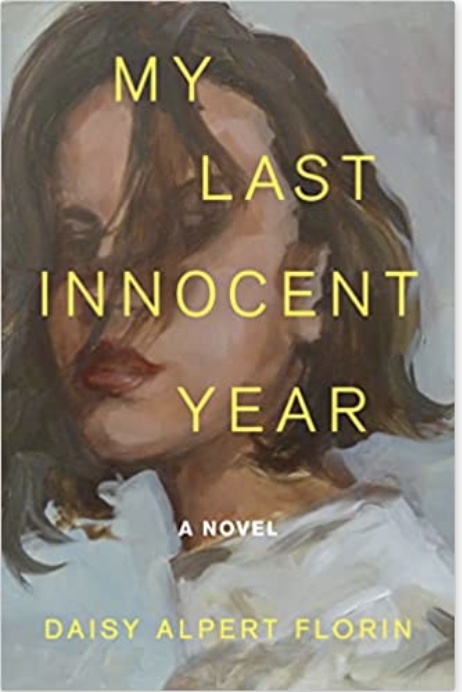
My Last Innocent Year: A Novel by Daisy Alpert Florin

Reviewed by Rebecca J Duncan

My Last Innocent Year: A Novel by Daisy Alpert Florin is a coming of age story set at the end of the last century, which is a scary way of saying the late 1990’s. For those of us lucky enough to live through the toxic amounts of hairspray and kohl black eyeliner applied with a jumbo crayon, Florin’s seemingly effortless prose will make you nostalgic for your oversized flannel shirt and that glorious time when you knew everything and nothing all at the same moment. But there is more to be found in Florin’s pages than memories of youth. She is saying something very important by not saying anything at all.

Isabel is your average college senior, excited for her last year of school and worried about what she will do after graduation. We learn a lot about her history and her friends, but what is different than many other books in this genre is that while Isabel may not know her own mind she is very comfortable with her sexuality as a woman. This seems small, but it is a relatively new development in literature.

Isabel is 21-years-old. She is sexually active and has been with several partners. She will experience a possible date rape, a relationship with an older professor and flirtations along the way and yet that isn’t the focus of the story. The focus is on Isabel learning her own mind and following her dreams. The days are long past( I hope)when heavy handed morality tales bent on scaring young girls onto the path of purity and obedience were published with ease, but their successors have been around in disguise every time a teenage girl gets pregnant after a night with the town bad boy. Every time the heroine is run out of town for sleeping with a married man. In each of these tropes, judgement is passed and it falls on the woman. Sex is dangerous for you and you are bad for wanting. You will be punished!

Florin sidesteps these cliched traps and instead traverses the higher ground of Isabel’s psyche. Who is she as an adult? As a woman? What are her thoughts and beliefs? You will always be your parent’s child, but what do you owe them or their memory? These questions are at the center of this novel.

By choosing or refusing to make Isabel’s sexuality the center of the story Florin has normalized Isabel’s right to sexual freedom. Free from judgment and free to find her path anyway she chooses.